ELEMNT v0.0.4: helps you build data you can trust

Improve your data quality experience on ELEMNT. Our Collection now supports a data schema and a new tile engine (Ruther Tile), as well as features for managing data from the source, clearly organizing and structuring it, facilitating analysis, collaborative development, and direct data visualization.
Every collection can have a schema
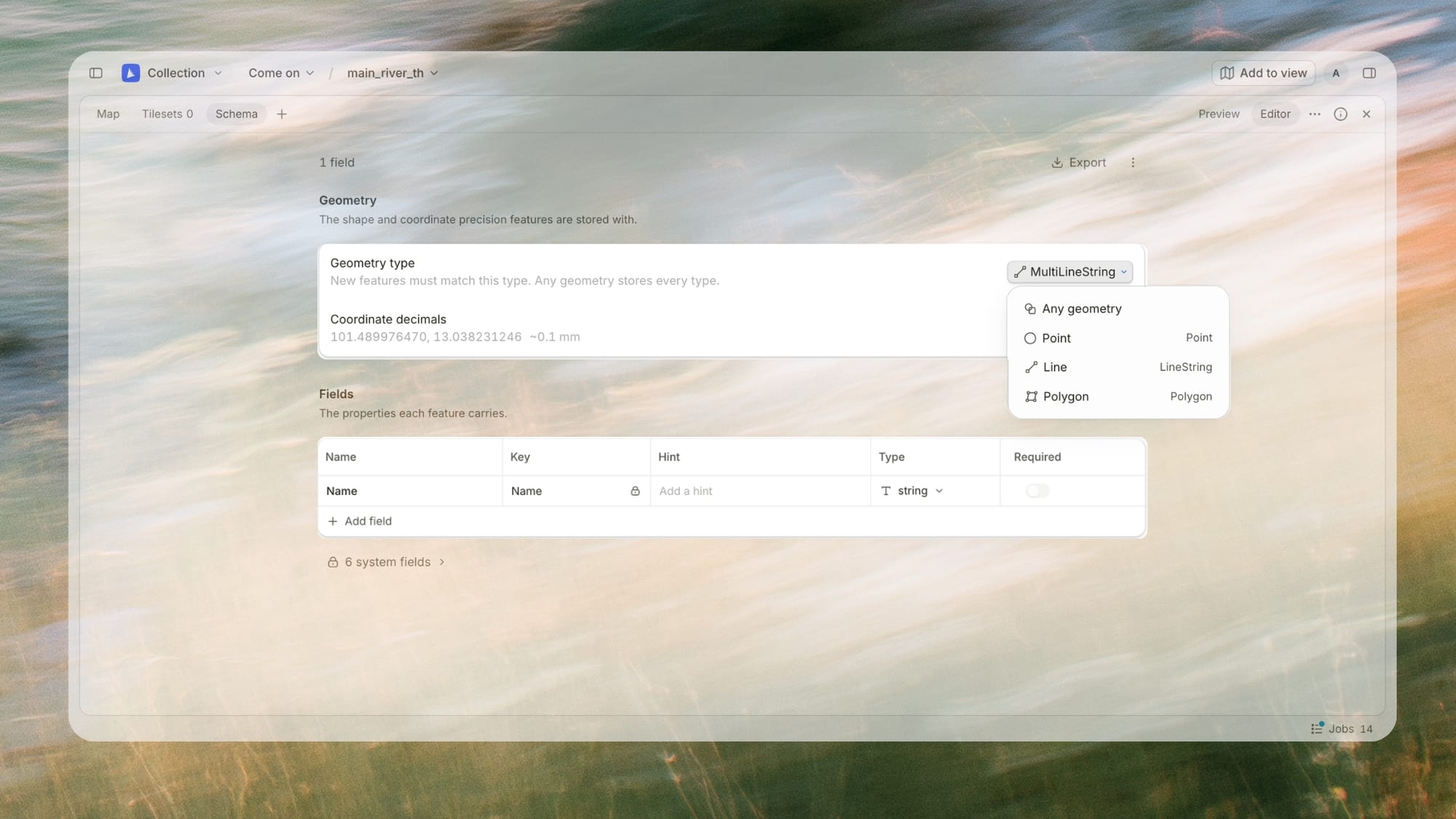
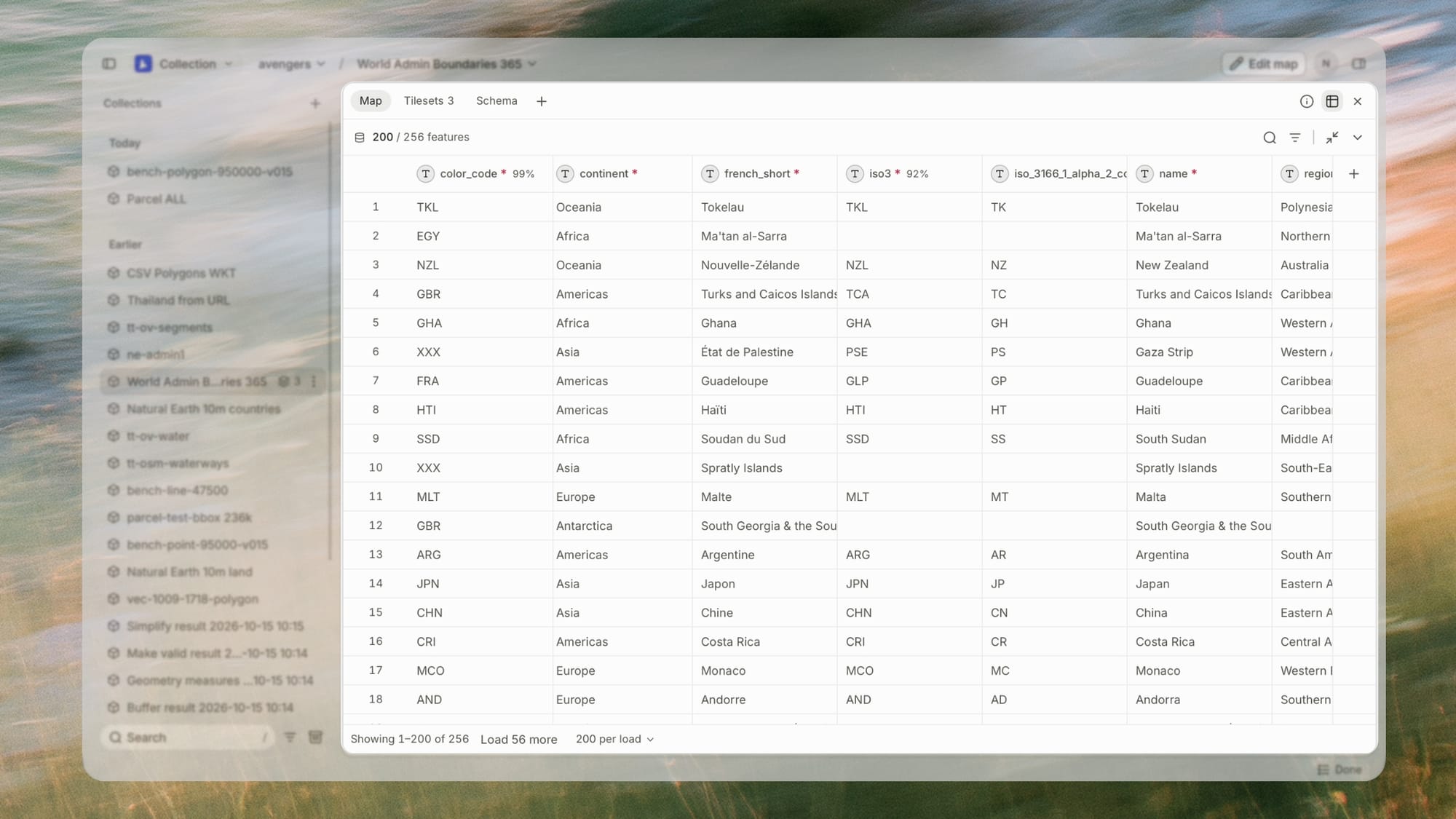
A schema describes the structure of your data, helping to define the characteristics of a dataset and verify its accuracy before it is stored. When you import data into a new collection, we read it and build the schema for you. You can adjust the schema yourself at any time.
Validate every change
Every feature that is created or updated from any ELEMNT surface, whether the app, the API, or a processing job, is always validated against the schema first. For example, you can set required fields to keep your data complete and accurate.
In addition, the schema can control which geometry type is stored in the Collection, so every feature in it shares the same clear shape.
Manage data on the map
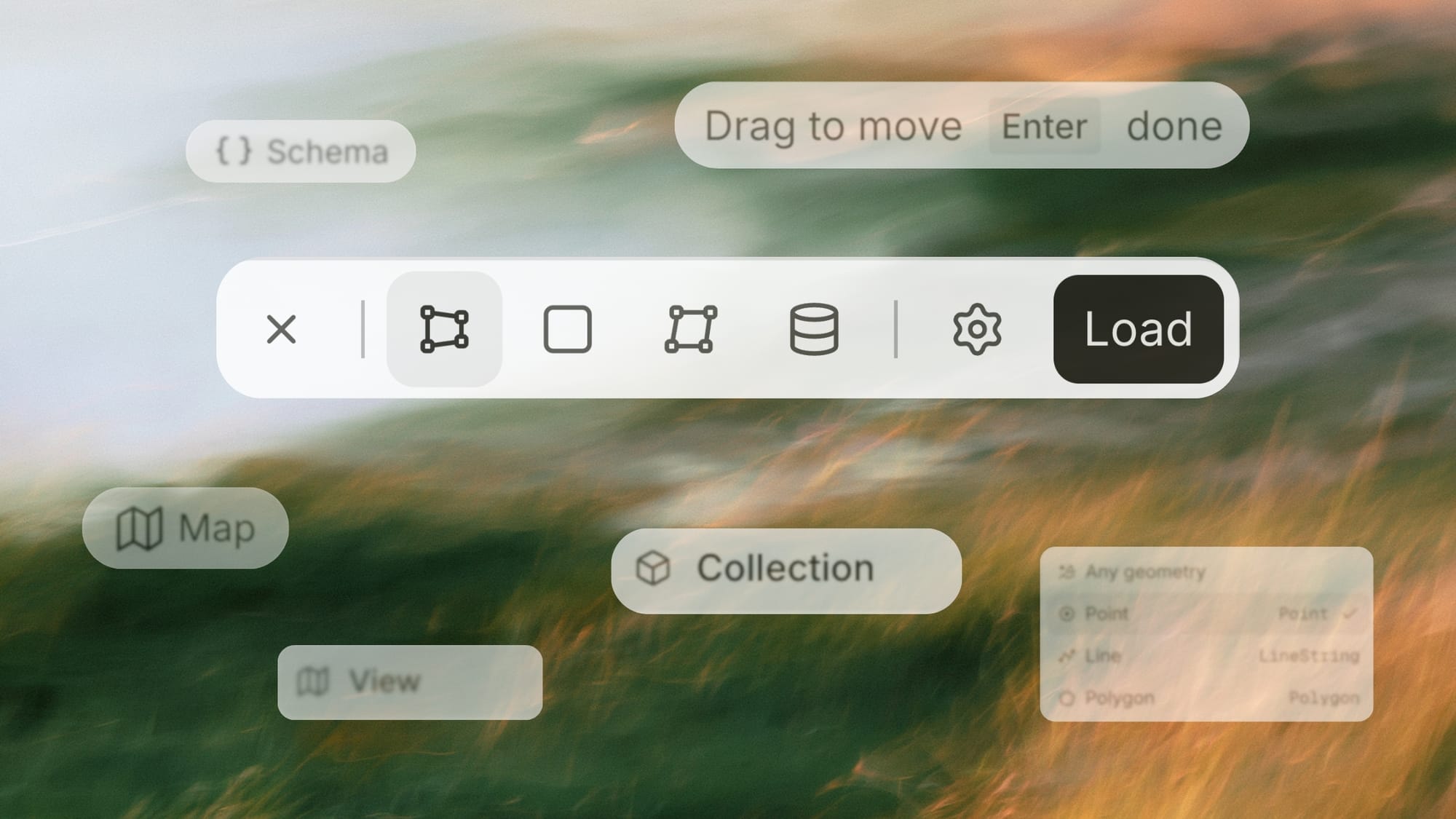
You can select any area on the map and add, delete, or edit features there, both their shapes and their attributes. Every change saves to the same Collection and goes through the same schema check as data from anywhere else. You can manage your data right away, without moving files between tools.
Data you can hand on with confidence
Each feature records who created it, who edited it, and when. Whoever receives the data knows where each record came from, and their analysis and statistics start from data that already follow your rules.
Tiles that start from your data
In this release, we reworked how we build tiles. Before the first tile, it now reads the whole Collection: how big the features are, how detailed the shapes are, and how dense each area is. From that, it picks a zoom range for each layer and builds only the zooms the data needs, so the first tileset is usable as is. Every zoom keeps all features and attributes, and nearby points group into clusters with their exact counts. Since import checks rows against the schema, fewer bad rows reach this step.
We will share more on how we build tiles in an upcoming post.
We're excited to see what you build on ELEMNT with data you can trust.